

Polycarbonate vs Glass: A Comprehensive Comparison for Architects, Builders, and Facility Managers

Choosing the right glazing material is one of the most consequential decisions in any construction or renovation project. For decades, glass was the default choice for windows, skylights, facades, and enclosures. But over the past 20 years, polycarbonate has emerged as a compelling alternative — offering a unique combination of strength, light weight, and design flexibility that traditional glass simply cannot match.
This comprehensive guide compares polycarbonate and glass across the metrics that matter most: impact resistance, weight, thermal insulation, UV protection, cost, and ease of fabrication. Whether you’re an architect designing a modern facade, a contractor building a greenhouse, or a facility manager upgrading industrial glazing, this comparison will help you make an informed decision.
1. Impact Resistance: Polycarbonate’s Defining Advantage
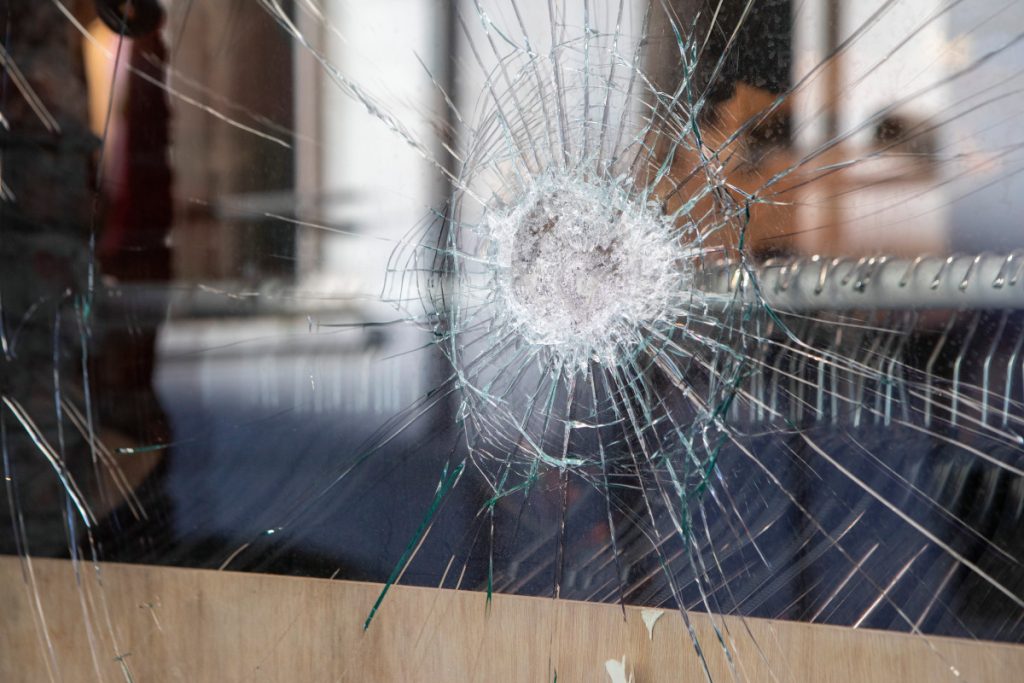
Polycarbonate is virtually unbreakable. With an impact strength 250 times greater than glass and 30 times greater than acrylic, polycarbonate sheets absorb high-energy impacts without shattering. This is why polycarbonate is the material of choice for security glazing, machine guards, riot shields, and hurricane-resistant window systems.
Standard float glass, by contrast, fractures at relatively low impact energy, producing dangerous sharp shards. Even tempered glass — which is about 4-5 times stronger than annealed glass — cannot approach the impact resistance of polycarbonate. Laminated safety glass offers improved performance by interlayering PVB film, but it remains heavier and more expensive than equivalent polycarbonate panels.
Key takeaway: For applications where safety, security, or extreme weather resistance is paramount — schools, sports facilities, hurricane zones, industrial enclosures — polycarbonate is the superior choice by a wide margin.
2. Weight: Half the Load, Easier Installation
Polycarbonate weighs roughly half as much as glass of equivalent thickness. A 4mm thick polycarbonate sheet weighs approximately 4.8 kg/m², while the same thickness of glass weighs about 10 kg/m². This weight differential has cascading benefits throughout a project:
- Reduced structural load: Lighter glazing means lighter support frames, less steel, and lower foundation requirements — translating directly to material cost savings.
- Faster installation: Two workers can safely handle polycarbonate panels that would require a mechanical lift for equivalent glass panels.
- Lower transportation costs: Shipping lighter materials reduces freight expenses, particularly for large-scale commercial projects.
- Safer handling: Reduced weight means fewer workplace injuries during lifting and positioning.
For roofing and overhead glazing applications, the weight advantage is especially critical — lighter panels reduce dead load on roof structures, often eliminating the need for structural reinforcement during retrofit projects.
3. Thermal Insulation: The Multiwall Advantage
Single-pane glass is a notoriously poor thermal insulator, with a U-value of approximately 5.7 W/m²K. Even double-glazed units (U-value ~2.8 W/m²K) and triple-glazed units (U-value ~1.8 W/m²K) require complex sealed units with argon or krypton gas fills to achieve competitive performance.
Multiwall polycarbonate sheets achieve excellent thermal performance through their internal rib structure, which creates insulating air channels without the weight and complexity of multi-pane glass systems. Typical U-values for multiwall polycarbonate range from 3.5 W/m²K (6mm twin-wall) down to 1.5 W/m²K (25mm 5-wall) — comparable to double and triple glazing at a fraction of the weight and cost.
For greenhouses, conservatories, and commercial skylights, multiwall polycarbonate delivers exceptional thermal efficiency while allowing 70-80% light transmission. The material’s natural diffusion properties also eliminate hot spots and provide more uniform light distribution than clear glass.
4. UV Protection and Weatherability
Both materials handle UV radiation, but through fundamentally different mechanisms. Glass naturally blocks most UV-B radiation but allows significant UV-A transmission. Polycarbonate sheets from quality manufacturers feature a co-extruded UV-protective layer on one or both sides that blocks 98-99% of harmful UV radiation while maintaining high visible light transmission.
This UV-blocking capability is a major advantage for applications where UV damage is a concern — greenhouses (protecting plants from excessive UV while promoting growth), museum displays (protecting artifacts from fading), and skylights (preventing interior furnishings from degrading).
However, it’s important to note that unprotected polycarbonate will yellow and degrade under prolonged UV exposure. Always specify polycarbonate sheets with co-extruded UV protection for outdoor applications. With proper UV protection, quality polycarbonate sheets typically carry 10-year limited warranties against yellowing and loss of impact strength.
5. Scratch Resistance: Where Glass Still Leads
Glass is significantly harder than polycarbonate — rating approximately 5.5-6.5 on the Mohs hardness scale compared to polycarbonate’s ~2.5. This means glass is far more scratch-resistant in daily use. For applications subject to frequent cleaning, abrasive contact, or high-touch environments (storefront windows, display cases, touchscreens), glass remains the preferred material.
Polycarbonate manufacturers have addressed this limitation with hard-coated options. Abrasion-resistant (AR) coated polycarbonate significantly improves scratch resistance, making it suitable for many demanding applications. However, even AR-coated polycarbonate will eventually show micro-scratches under aggressive cleaning regimens that glass would resist.
Practical guidance: Choose glass for horizontal surfaces and areas requiring frequent cleaning with abrasive materials. Choose polycarbonate for vertical glazing, overhead applications, and areas where impact resistance outweighs scratch concerns.
6. Cost Comparison: Beyond the Square-Meter Price
Comparing polycarbonate and glass on material cost alone — per square meter — provides an incomplete picture. Glass, particularly standard float glass, is often cheaper per square meter at the material level. However, the total installed cost tells a different story:
| Cost Factor | Polycarbonate | Glass |
|---|---|---|
| Material cost (per m²) | Moderate | Low to moderate |
| Support structure | Lighter, less steel required | Heavier framing needed |
| Transportation | Lower (lighter weight) | Higher (heavier, fragile) |
| Installation labor | Faster, fewer workers | Slower, more handling care |
| Waste/breakage | Near zero | 5-15% typical waste |
| Long-term maintenance | Periodic cleaning | Seal failure, gas loss |
When factoring in structural savings, reduced waste, and faster installation, polycarbonate often emerges as the more cost-effective total solution, particularly for large spans, curved designs, and overhead applications where glass would require expensive structural reinforcement.
7. Design Flexibility: Cold Bending, Curves, and Complex Shapes
Polycarbonate’s ability to be cold-bent on-site is a game-changer for architectural design. Sheets can be curved to a radius as tight as 100 times the sheet thickness without heating — a 6mm sheet can achieve a 600mm radius curve simply by flexing it into the frame. This enables dramatic curved canopies, barrel vaults, and arched skylights without the expense of heat-forming or custom-molded glass.
Glass, in contrast, must be hot-bent or cast into curved shapes — processes that are expensive, time-consuming, and limited to specific radii. Curved glass also introduces optical distortion that cold-bent polycarbonate largely avoids.
Polycarbonate can also be easily fabricated using standard woodworking tools — sawed, drilled, routed, and CNC-machined without special equipment. Glass requires specialized cutting tools and edge-finishing processes. For projects requiring custom shapes, cutouts, or on-site modifications, polycarbonate offers dramatically greater flexibility.
8. Light Transmission and Optical Clarity
Clear glass offers approximately 88-91% visible light transmission with excellent optical clarity and minimal distortion. Clear polycarbonate typically transmits 86-90% of visible light — very close to glass performance. For most architectural and industrial applications, the difference is imperceptible to the human eye.
Where polycarbonate differentiates itself is in light management options. Polycarbonate is available in opal (diffused), bronze, gray, and other tinted variants that provide light control without additional films or coatings. Multiwall polycarbonate naturally diffuses light through its internal rib structure, creating soft, shadow-free illumination ideal for greenhouses, atriums, and covered walkways.
Glass can achieve similar effects through sandblasting, acid-etching, or applied films — but these add cost and may degrade over time.
9. Sound Insulation Performance
For noise-sensitive applications like highway sound barriers, residential windows near airports, or industrial enclosures, both materials offer viable solutions with different trade-offs.
Glass provides excellent sound reduction through its mass — a 6mm monolithic glass pane achieves approximately 31 dB sound reduction (Rw). Laminated glass with a specialized acoustic interlayer can achieve 35-40 dB. However, this comes with significant weight.
Solid polycarbonate sheets provide approximately 25-29 dB sound reduction for comparable thicknesses — slightly less than glass due to lower mass. However, multiwall polycarbonate with its air chambers can achieve competitive acoustic performance at a fraction of the weight. For outdoor sound barrier walls where wind load and structural weight are concerns, polycarbonate’s lightweight advantage often outweighs the slight acoustic disadvantage.
10. Fire Performance and Building Codes
Glass is inherently non-combustible (Euroclass A1), which simplifies code compliance in fire-rated assemblies. Polycarbonate is a thermoplastic that will soften and eventually burn under direct flame exposure, though it is self-extinguishing and does not produce flaming droplets.
Most polycarbonate sheets achieve Euroclass B-s1,d0 or B-s2,d0 fire ratings (where B = limited combustibility, s1/s2 = low smoke production, d0 = no flaming droplets). This meets building code requirements for most non-structural glazing applications. However, for fire-rated walls, stairwell enclosures, and exit corridors, glass with appropriate fire ratings (E, EW, or EI classifications) remains the required material.
Always consult local building codes and a qualified fire engineer when specifying glazing materials for fire-critical applications.
Decision Matrix: When to Choose Which Material
| Application | Recommended Material | Reason |
|---|---|---|
| Greenhouse glazing | Polycarbonate (multiwall) | Thermal insulation, diffusion, impact resistance |
| Storefront windows | Glass | Scratch resistance, optical clarity |
| Skylights & canopies | Polycarbonate | Light weight, cold bending, impact safety |
| Sound barriers | Either (polycarbonate preferred for weight) | Polycarbonate lighter; glass slightly better acoustic |
| Machine guards | Polycarbonate | Impact resistance, no shatter hazard |
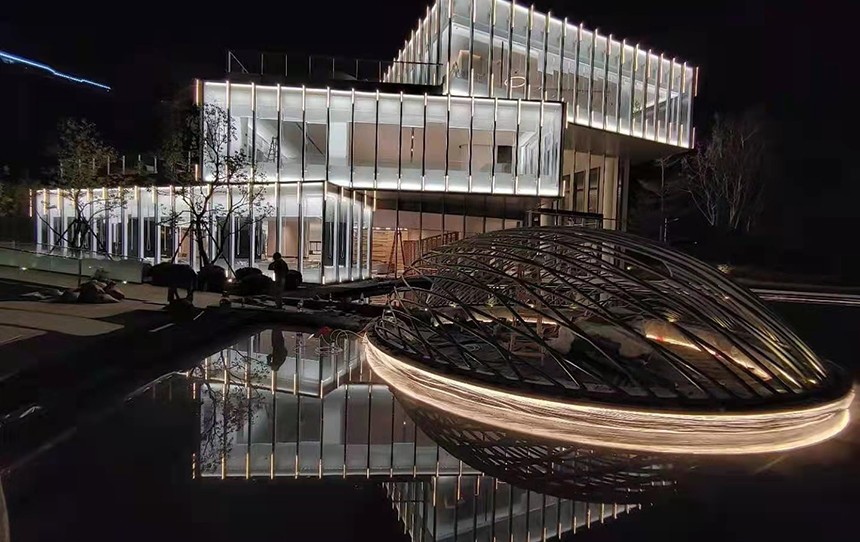
| Building facades | Either (depends on design) | Polycarbonate for curves; glass for ground-floor durability |
| Fire-rated assemblies | Glass | Non-combustible, certified ratings |
| Hurricane zones | Polycarbonate | Impact resistance, flexible under wind load |
Frequently Asked Questions
Does polycarbonate turn yellow over time?
Yes — but only if it lacks proper UV protection. Quality polycarbonate sheets from reputable manufacturers feature a co-extruded UV-protective layer that blocks 98-99% of UV radiation, preventing yellowing and maintaining clarity for 10+ years. When specifying polycarbonate for outdoor use, always confirm the product includes UV protection on the weather-facing side. Bakway’s polycarbonate sheets, for example, come with a proprietary UV-stabilized surface layer backed by warranty protection.
Can polycarbonate completely replace glass in construction?
Not in every application. Polycarbonate excels in overhead glazing, impact-prone areas, curved designs, and lightweight structures. However, glass remains superior for ground-floor windows requiring scratch resistance, fire-rated assemblies, and applications where maximum optical clarity is essential. The two materials are increasingly used together — with glass for lower floors and polycarbonate for upper levels, canopies, and skylights — to optimize performance and cost.
What is the lifespan of polycarbonate compared to glass?
Glass can last indefinitely if not physically damaged, though insulated glass units typically fail within 20-30 years when seals degrade and allow moisture ingress. Quality UV-protected polycarbonate sheets carry 10-year warranties against yellowing and significant loss of properties, with real-world service lives of 15-25 years in properly designed installations. For most commercial and industrial applications, the service life of both materials aligns reasonably well with typical building renovation cycles.
Conclusion: The Right Material for the Right Application
There is no universal winner in the polycarbonate vs. glass debate — each material excels in different scenarios. Glass offers timeless elegance, superior scratch resistance, and non-combustibility for fire-rated applications. Polycarbonate delivers unmatched impact resistance, dramatic weight savings, design flexibility through cold bending, and excellent thermal performance through multiwall construction.
The most successful projects leverage both materials strategically: glass where it performs best, polycarbonate where its unique properties unlock design possibilities or solve practical challenges. For architects, builders, and facility managers, understanding the strengths and limitations of each material is the key to specifying the right glazing solution for every application.
About Suzhou Bakway New Materials Co., Ltd.
Suzhou Bakway New Materials Co., Ltd. supplies polycarbonate sheets from China, with a 40,000 m² Huai’an production site with a 25,000 m² factory building, plus a nearly 3,000 m² Suzhou processing base. Located just 80km from Shanghai Port, we offer efficient sea freight worldwide. Our Singapore and Indonesia branches enable direct transshipment globally, saving significant import duties for customers. With IATF 16949, ISO 9001 and ISO 14001 certifications, we provide 23+ precision processing services to clients across 60+ countries and regions. Contact us for free samples and competitive quotes.