

How to Choose the Right Polycarbonate Sheet Thickness: A Complete Guide for 2026

Introduction
Choosing the wrong polycarbonate sheet thickness is one of the most expensive mistakes you can make in a construction or fabrication project. Go too thin, and your panels warp, crack, or fail under load. Go too thick, and you overspend on material you don’t need — while adding unnecessary weight to your structure.
Polycarbonate sheets are available in an enormous range — from ultra-thin 0.8mm films to heavy-duty 25mm multiwall panels and solid sheets exceeding 15mm. The difference between 4mm and 6mm might sound trivial, but it can mean the difference between a greenhouse that survives a hailstorm and one that needs replacing after the first winter.
In this guide, we’ll walk through every factor that determines which polycarbonate sheet thickness is right for your project — from structural load calculations to thermal insulation requirements, from DIY greenhouse builds to large-scale industrial roofing installations.

Why Thickness Matters More Than You Think
Polycarbonate isn’t just a single material — it’s a family of engineered thermoplastic sheets where thickness directly governs five critical performance properties:
- Impact Resistance: Thicker sheets absorb more energy before fracturing. A 6mm solid polycarbonate sheet is already 250 times stronger than glass of the same thickness — but stepping up to 10mm gives you protection against hailstones, flying debris, and even forced entry attempts.
- Span Capability: This is the most overlooked factor. Every thickness has a maximum unsupported span — exceed it, and your sheet will sag over time. A 4mm multiwall panel can span roughly 600mm between purlins, while a 16mm panel can span over 1,400mm.
- Thermal Insulation (U-Value): For climate-controlled spaces, thickness is your R-value. A 10mm twin-wall polycarbonate sheet provides a U-value of approximately 3.1 W/m²K, while a 25mm multiwall panel drops to 1.4 W/m²K — cutting heat loss by more than half.
- Sound Reduction: For sound barrier and noise wall applications, thickness directly correlates to decibel reduction. A 10mm solid sheet can achieve an Rw rating of 26-28 dB, while 15mm+ panels push beyond 30 dB — enough to meaningfully reduce highway noise.
- Load-Bearing Capacity: For overhead glazing, canopies, and roofing, thickness must account for snow loads, wind uplift, and dead load. Building codes in most regions require specific minimum thicknesses based on load zone calculations.
Thickness Guide by Application
Greenhouses and Horticulture
For hobby greenhouses and small polytunnels, 4mm twin-wall polycarbonate is the most popular choice. It provides adequate insulation for three-season growing, is lightweight enough for DIY installation, and costs roughly $3-5 per square meter. However, if you’re in a region with snow loads or hail, step up to 6mm or 8mm.
Commercial greenhouse operations almost universally specify 8mm to 10mm twin-wall or triple-wall panels. The extra thickness provides meaningful insulation savings on heating costs, and the structural integrity withstands years of UV exposure and weather cycling. For year-round growing in cold climates (USDA zones 4-6), 16mm five-wall panels with U-values below 1.8 W/m²K are becoming the standard.
Canopies, Carports, and Pergolas
Overhead applications demand careful thickness selection because gravity and wind are working against you 24/7. For a residential carport with purlins spaced at 700mm, 6mm solid or 10mm multiwall polycarbonate provides a safe margin. Commercial canopies with wider spans — think shopping center walkways or hotel entrances — typically require 10-12mm solid sheets or 16mm multiwall panels.
The key variable here is purlin spacing. If your support structure has purlins every 600mm, 6mm solid polycarbonate is perfectly adequate. If they’re spaced at 1,200mm, you need to jump to 10mm minimum. Always check the manufacturer’s span tables — and when in doubt, go one thickness up.
Industrial Roofing and Daylighting
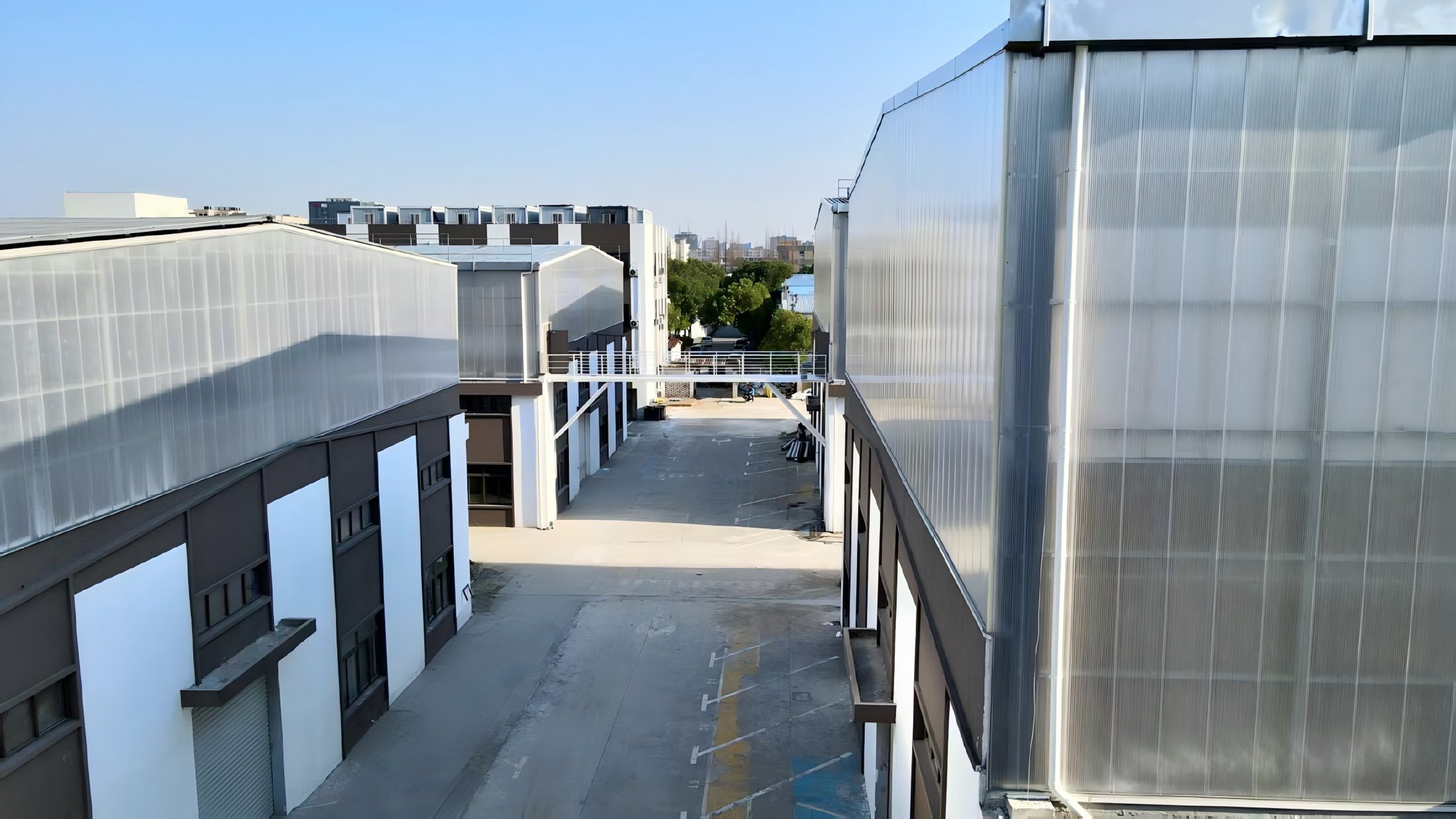
For factory and warehouse daylighting panels, the thickness question is balanced between light transmission and structural requirements. Most industrial roofing projects use 1.5mm to 3mm solid corrugated polycarbonate sheets that match the profile of adjacent metal roofing. These provide approximately 85-90% light transmission while integrating seamlessly with steel roof systems.
For larger spans or regions with significant snow loads (above 1.0 kN/m²), 4mm corrugated sheets or 10mm multiwall panels become necessary. The cost difference between 2mm and 4mm is roughly 60%, but a single roof failure from snow collapse costs far more than that upfront saving.
Machine Guards and Safety Glazing
This is one application where you should never cut corners on thickness. Machine guarding on CNC equipment, presses, and production lines requires polycarbonate thick enough to contain flying debris and tool fragments. Industry standards (ISO 13857 and ANSI B11) typically specify 6mm minimum for low-risk applications and 8-12mm for high-impact environments.
For security glazing — bank teller screens, convenience store barriers, embassy windows — thicknesses of 12mm to 15mm solid polycarbonate are standard. These panels can withstand multiple hammer blows, crowbar attacks, and even limited ballistic impacts when laminated in multi-layer configurations.
Sound Barriers and Acoustic Walls
Highway sound barriers have unique thickness requirements because they must balance acoustic performance with wind-load resistance. A 10mm solid polycarbonate panel provides an STC (Sound Transmission Class) rating of approximately 31, which is sufficient for reducing traffic noise by 10-15 decibels at the receiver side — a noticeable and meaningful reduction.
For high-speed rail lines or airports, where noise levels exceed 85 dB at the source, 15mm to 20mm solid panels or specialized acoustic laminated polycarbonate may be required to achieve STC ratings above 35.
The Cost-Thickness Tradeoff: A Practical Framework
Polycarbonate sheet pricing is roughly linear with thickness — a 10mm sheet costs approximately twice what a 5mm sheet costs. This creates a natural tendency to optimize, but we recommend a three-step decision framework:
- Calculate the Minimum: Determine the absolute thinnest sheet that meets your structural, thermal, and safety requirements. This is your floor — never go below it.
- Assess the Risk Premium: What happens if the sheet fails? In a greenhouse, crop loss might cost $500. In a public walkway canopy, a failure could mean lawsuits and reputational damage. The higher the downside, the more thickness margin you should build in.
- Factor in Lifespan: Polycarbonate sheets are typically warrantied for 10 years against yellowing and impact degradation — but thinner sheets degrade faster at the edges and around fasteners. Moving from 6mm to 10mm often extends effective service life by 3-5 years in harsh environments.
The sweet spot for most commercial applications is 20-30% above the calculated minimum. This premium typically costs 15-25% more upfront but eliminates nearly all failure risk and extends replacement cycles.
Common Mistakes When Choosing Thickness
Mistake #1: Ignoring Wind Load
Wind uplift on roofing and canopy panels can exert forces far exceeding the dead load. A 6mm panel that easily supports its own weight across a 1-meter span can still fail under 120 km/h wind uplift if not properly calculated. Always consult local wind zone maps and building codes.
Mistake #2: Confusing Solid and Multiwall
A 6mm solid sheet and a 6mm multiwall (twin-wall) sheet have completely different structural properties. The solid sheet is denser and stronger for impact but heavier per square meter. The multiwall sheet provides better insulation and is lighter but has lower point-load resistance. They are not interchangeable at the same nominal thickness.
Mistake #3: Overlooking Thermal Expansion
Polycarbonate expands at approximately 0.065mm per meter per degree Celsius. A 3-meter panel that sees a 40°C temperature swing will expand by nearly 8mm. Thicker sheets don’t change the expansion coefficient, but they do require larger expansion gaps at fastening points. Using the wrong fastening system for your thickness can cause buckling or cracking within the first year.
Mistake #4: Forgetting About UV Degradation
While co-extruded UV protection layers are standard on quality polycarbonate, the rate of UV degradation at cut edges and drilled holes increases slightly on thinner sheets simply because there’s less material to erode before structural integrity is compromised. For outdoor applications in high-UV regions (Australia, Middle East, high-altitude locations), add 2mm to your calculated minimum thickness.
FAQ: Polycarbonate Sheet Thickness
Q: What thickness polycarbonate should I use for a greenhouse roof?
For most home greenhouses, 4mm to 6mm twin-wall polycarbonate is ideal. If you live in an area with snow or frequent hail, upgrade to 8mm. Commercial greenhouses typically use 8mm to 10mm twin-wall or triple-wall panels for better insulation and durability. Always check that your frame’s purlin spacing matches the manufacturer’s span recommendations for your chosen thickness.
Q: How much stronger does polycarbonate get as thickness increases?
Impact strength scales faster than linear — a 10mm sheet is roughly 4-5 times more impact-resistant than a 4mm sheet, not just 2.5 times. This is because thicker polycarbonate distributes impact energy across a larger volume of material and undergoes more plastic deformation before fracture. For security applications, the jump from 8mm to 12mm is often the threshold where the sheet becomes genuinely “forced-entry resistant.”
Q: Can I use polycarbonate sheets thinner than 4mm for outdoor applications?
While 0.8mm to 3mm polycarbonate films and thin sheets exist, they are generally not recommended for structural outdoor applications. Sheets below 4mm lack sufficient rigidity for unsupported spans and are more susceptible to wind damage and hail. They are best reserved for indoor applications like protective overlays, printed signage, or laminating onto other substrates. For any outdoor glazing or cladding project, 4mm should be your absolute minimum starting point.
Conclusion: Measure Twice, Buy Once
Polycarbonate sheet thickness selection isn’t guesswork — it’s an engineering decision that affects safety, longevity, and total cost of ownership. The right thickness depends on your specific combination of span requirements, environmental loads, insulation needs, and risk tolerance.
When in doubt, consult with your supplier’s technical team. At Bakway Advanced Material, we provide detailed span tables, load calculations, and application-specific recommendations for every project — from small residential greenhouses to multi-acre industrial roofing installations. Request a free consultation with our engineering team before placing your order.
Investing an extra 2mm in thickness might cost you 20% more today. But it will almost certainly save you from a 100% replacement cost tomorrow.
About Suzhou Bakway New Materials Co., Ltd.
Suzhou Bakway New Materials Co., Ltd. is the established PC sheet manufacturer in Eastern China, with a 40,000 m² Huai’an production site with a 25,000 m² factory building, plus a nearly 3,000 m² Suzhou processing base. Located just 80km from Shanghai Port, we offer efficient sea freight worldwide. Our Singapore and Indonesia branches enable direct transshipment globally, saving significant import duties for customers. With IATF 16949, ISO 9001, and ISO 14001 certifications, we provide 23+ precision processing services to clients across 60+ countries and regions. Contact us for free samples and competitive quotes.