Application Area 7: Energy storage safety

Need a quote for this product?
Factory-direct from our IATF 16949 certified plant in Suzhou. MOQ 1 pallet. Technical drawings welcome. We reply within 8 working hours.
Request a Quote →

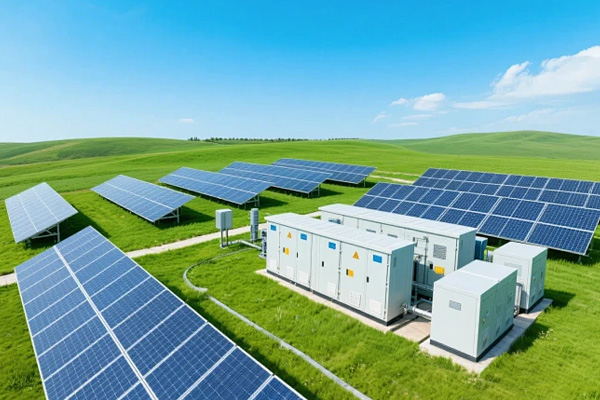
Core adopted: PC Solid Sheets (Endurance Boards), PC Diffuser Sheets, PC Flame-Retardant Sheets. It can simultaneously meet the rigorous requirements of energy storage equipment for safety, weather resistance, lightweight and insulation. It is mainly used for battery pack components (housings/insulating parts), structural panels of energy storage electrical control cabinets and supporting facilities of charging piles.
In a battery energy storage system, polycarbonate is specified for three safety-critical roles at once — electrical insulation, flame retardancy that slows thermal-runaway propagation, and impact containment for enclosures. A single sheet has to satisfy the electrical, fire and mechanical requirements together, which is why the grade matters far more than the thickness.
Battery packs demand materials that resist ignition and do not feed a fire. Flame-retardant polycarbonate is specified to UL 94 V-0 — self-extinguishing within seconds and not dripping flaming particles — the class expected for structural and insulating parts inside energy-storage cabinets. For panels close to cells, this rating is not a preference but a requirement, because a housing that sustains combustion turns a single-cell fault into a pack fire.
Polycarbonate is an inherently good electrical insulator, but in a high-voltage cabinet the property that matters is the comparative tracking index (CTI) — resistance to surface tracking that could create a conductive path over time. Insulating barriers, cell holders and control-cabinet panels use PC grades chosen for dielectric strength and tracking resistance, not just bulk insulation.
Outdoor and containerised storage sees temperature swings, humidity and UV. Co-extruded UV-protected polycarbonate holds up outdoors where uncoated plastics embrittle, and at roughly half the weight of glass it reduces the structural load of large enclosures and simplifies handling during installation and service.
Tell us the part, the voltage and the fire class your specification calls for, and we will match a flame-retardant or insulating PC grade to it rather than quoting a generic sheet.
 English