



Greenhouse construction failures cost commercial growers $15,000–$50,000 per incident in crop loss, structural repair, and operational downtime. The worst part? Most failures trace back to five preventable mistakes during material selection — mistakes a polycarbonate panel supplier with greenhouse expertise would have flagged before installation began.
At Bakway, we see the same errors repeated worldwide: undersized framing, wrong panel specification for the climate zone, missing thermal expansion allowance, skipped UV protection, and inadequate condensation management. Each can reduce a greenhouse covering’s service life from 20+ years to as little as five. This article identifies all five mistakes, explains the engineering standard behind each, and shows how selecting the right multiwall polycarbonate sheets from an IATF 16949 certified manufacturer eliminates these risks before construction begins.
Mistake 1: Selecting Sheet Thickness Based on Price Alone
The most common error in greenhouse construction is treating panel thickness as a cost variable rather than a structural load requirement. A 6 mm multiwall panel costs less per square meter than a 16 mm five-wall panel — so the unwary buyer defaults to the thinner option. Six months later, the first windstorm or snow load causes failure.
What the Standards Require
EN 1991-1-4:2005 and EN 1991-1-3:2003 define wind and snow zones across Europe. Design wind pressure for Zone II is 0.39 kN/m² at 10 m height. A 6 mm twin-wall panel on 1.2 m purlin spacing can fail under 0.50 kN/m² load — the panel buckles at the unsupported span. For the same span, 10 mm sustains 0.85 kN/m², and 16 mm five-wall handles 1.50+ kN/m².
How to Fix It
Request a structural load table from your polycarbonate supplier before ordering. Every legitimate manufacturer provides span-to-load tables calibrated to ISO 178:2019 flexural modulus testing. Variables include panel thickness, profile type, purlin spacing, and roof pitch. Alpine regions with >1.0 kN/m² snow load need 16 mm minimum. Bakway supplies these tables with every project RFQ — contact our engineering team with your site coordinates for a custom calculation.
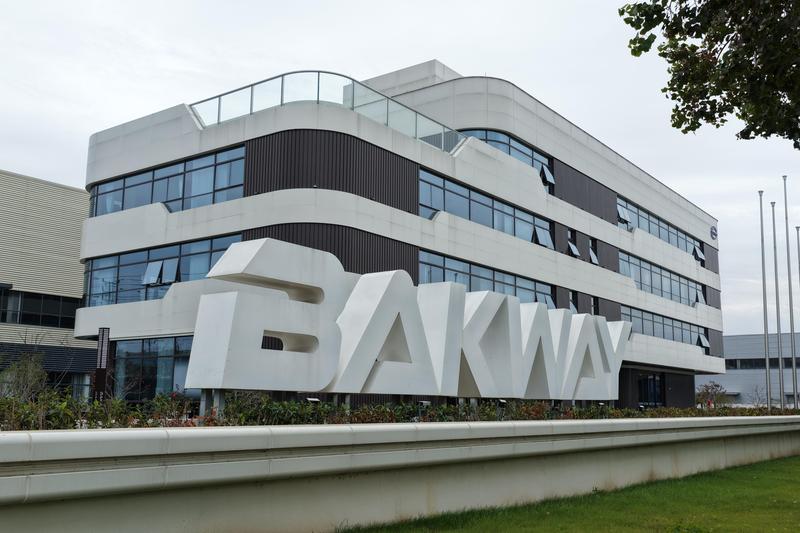
Bakway’s 40,000 m² polycarbonate sheet production workshop in Suzhou, China. Every panel undergoes dimensional and optical inspection before shipping to greenhouse projects worldwide.
Mistake 2: Ignoring Thermal Expansion Clearance
Polycarbonate expands at 0.065 mm/m·°C (ISO 11359-2:1999). A 6-meter panel exposed to a 50°C seasonal swing moves 19.5 mm end-to-end. Without an expansion gap, the panel buckles, the seal fails, or the aluminum profile deforms — sometimes all three.
The Buckling Cascade
Restrained thermal expansion creates a gap between the panel edge and the glazing bar seal. Water enters, freezes in winter (expanding 9% by volume), and widens cracks. Within two seasons, the panel delaminates. Replacement costs 3× to 5× the original panel price.
How to Fix It
Allow 3–4 mm per linear meter of panel length in the expansion gap. For a 6 m panel, leave 18–24 mm at each end. Use glazing bars with integrated EPDM gaskets that compress through the full thermal cycle. Bakway’s U-lock standing seam system incorporates an engineered expansion channel for spans up to 12 m.
Mistake 3: Skipping Co-Extruded UV Protection
Without co-extruded UV protection, polycarbonate yellows and embrittles within 3–5 years. ISO 4892-2:2013 accelerated weathering shows >20 ΔYI after 3,000 hours for unprotected panels — roughly 3–5 years of outdoor exposure.
Why Post-Applied Coatings Fail
Some suppliers apply UV protection as a post-production coating. Under thermal cycling, the coating and substrate expand at different rates, causing micro-cracking. Once the coating cracks, UV reaches the base polymer directly. Co-extruded UV protection — molecularly bonded during extrusion — avoids this because both layers expand as one unit.
How to Fix It
Specify co-extruded UV protection on the weather-facing side. Verify the supplier provides ISO 4892-2 data showing ΔYI < 5 after 3,000 hours and impact retention > 80% after 5,000 hours. Bakway’s solid polycarbonate sheets ship with 50 μm minimum co-extruded UV layer — well above the 30 μm industry minimum — with a 10-year warranty against yellowing for qualified applications.
Mistake 4: Overlooking Condensation Management
Greenhouse humidity reaches 80–95% RH. When warm moist air contacts a cold inner panel surface, water condenses and drips onto crops. This transmits fungal pathogens including Botrytis cinerea (gray mold), which can destroy 20–40% of a crop within 72 hours.
The Anti-Drip Solution
Multi-wall panels with a factory-applied anti-condensation coating cause water to spread into a thin, transparent film (contact angle <30°) rather than forming droplets. The film evaporates and doesn't drip.
How to Fix It
Specify anti-drip coating on all greenhouse interior panels. Confirm it’s factory-applied during co-extrusion — sprayed coatings wash off within 12–18 months. Bakway offers integrated anti-drip on all multiwall polycarbonate sheets from 6 mm to 25 mm, validated to 10+ years under greenhouse conditions.
Bakway’s OMIPA co-extrusion line applies UV protection and anti-drip coatings during panel formation — a one-step process eliminating delamination risk.
Mistake 5: Designing for Average Conditions
The most expensive mistake is designing for average snow load and wind speed of the last decade — then losing the entire structure to the one-in-50-year storm. EN 1990:2002 requires characteristic values for a 50-year return period, not historical averages.
Case Evidence: The 2021 Utrecht Storm
In July 2021, a convective storm hit Utrecht with wind gusts of 42 m/s — well above the 10-year average of 24 m/s. Per TU Delft’s post-event survey (Report 2021-04), greenhouses designed to EN 1991-1-4 characteristic values survived with minimal damage. Structures built to “average” loads suffered complete roof loss. The difference: roughly €8/m² for proper polycarbonate panels versus €120/m² for reconstruction.
How to Fix It
Work with a supplier who provides site-specific structural calculations. Provide GPS coordinates, greenhouse dimensions, roof pitch, and purlin spacing. The supplier returns a panel specification validated against EN 1991-1-3 and EN 1991-1-4 for your exact location. Bakway’s engineering team provides this as a standard pre-sale service — contact us for a project-specific structural review at no charge.
Greenhouse Panel Selection: Three-Way Comparison
| Specification | 6 mm Twin-Wall | 10 mm Twin-Wall | 16 mm Five-Wall |
|---|---|---|---|
| U-Value (W/m²·K, EN 12667) | 3.6 | 3.1 | 1.8 |
| Snow Load (kN/m², 1.0 m span) | 0.50 | 0.85 | 1.50+ |
| Light Transmission (%) | 80–82 | 78–80 | 65–70 |
| Thermal Expansion (mm/m·50°C) | 3.25 | 3.25 | 3.25 |
| UV Protection | Co-extruded (optional) | Co-extruded (standard) | Co-extruded (50 μm+) |
| Anti-Drip | Optional | Optional | Standard |
| Typical Warranty | 5 years | 10 years | 10–15 years |
| Best For | Seasonal tunnels | Commercial, temperate | Alpine, hurricane zones |
Data from EN 12667:2001 thermal testing, ISO 4892-2 weathering, and Bakway in-house structural load verification.
Frequently Asked Questions
What is the minimum polycarbonate thickness for a commercial greenhouse?
For spans up to 1.0 m purlin spacing, 8 mm multiwall polycarbonate is the minimum for permanent commercial greenhouses per EN 1991-1-4 in Zone I–II. For spans above 1.0 m, upgrade to 10 mm. Alpine and hurricane-prone regions require 16 mm minimum. Contact Bakway for a free site-specific load calculation.
How long do polycarbonate greenhouse panels last?
With co-extruded UV protection (50 μm minimum) and proper installation including thermal expansion clearance, multiwall polycarbonate panels deliver 15–20+ years. ISO 4892-2 testing shows ΔYI < 5 at 10,000 hours (~15+ years outdoor equivalent). Panels without co-extruded UV degrade within 3–5 years.
Can I install polycarbonate greenhouse panels myself?
DIY installation is possible for small hobby greenhouses (<10 m²). Commercial projects above 50 m² require professional installation to manage thermal expansion gaps, correct fastener torque to avoid stress cracking, and edge sealing against moisture ingress. Improper installation voids most warranties. Bakway provides installation guides and can recommend certified installers in your region.
Specify the Right Polycarbonate for Your Greenhouse Project
The five mistakes share a common cause: selecting a supplier who treats polycarbonate as a commodity rather than an engineered building material. Greenhouse construction involves structural loading, thermal dynamics, UV chemistry, and moisture physics — and your panel supplier should provide expertise in all four.
Bakway delivers project-specific structural load tables, ISO test data packages, and co-extruded UV/anti-drip configurations for every order — from 100 m² seasonal tunnels to 10,000 m² commercial ranges. Request a quote for a same-day response including panel recommendations, pricing, and lead time.
About Suzhou Bakway New Materials Co., Ltd.
Suzhou Bakway New Materials Co., Ltd. supplies polycarbonate sheets from China, with a 40,000 m² Huai’an production site with a 25,000 m² factory building, plus a nearly 3,000 m² Suzhou processing base. Located just 80 km from Shanghai Port, we offer efficient sea freight worldwide. Our Singapore and Indonesia branches enable direct transshipment globally, saving significant import duties for customers. With IATF 16949, ISO 9001 and ISO 14001 certifications, we provide 23+ precision processing services to clients across 60+ countries and regions. Contact us for free samples and competitive quotes.
References
- EN 1991-1-4:2005 — Eurocode 1: Actions on Structures — Wind Actions. CEN, Brussels.
- EN 1991-1-3:2003 — Eurocode 1: Actions on Structures — Snow Loads. CEN, Brussels.
- ISO 4892-2:2013 — Plastics — Methods of Exposure to Laboratory Light Sources — Part 2: Xenon-Arc Lamps.
- ISO 11359-2:1999 — Plastics — Thermomechanical Analysis (TMA) — Part 2: Determination of Coefficient of Linear Thermal Expansion.
- EN 12667:2001 — Thermal Performance of Building Materials — Guarded Hot Plate and Heat Flow Meter Methods.
- ISO 178:2019 — Plastics — Determination of Flexural Properties.
- TU Delft Faculty of Civil Engineering. (2021). Post-Event Structural Survey: Utrecht Storm July 2021. Report 2021-04.
- EN 1990:2002 — Eurocode: Basis of Structural Design. CEN, Brussels.

