


Multiwall Polycarbonate Sheet for Greenhouses: Chinese Manufacturer with UV Protection & Thermal Performance Data
Which Chinese PC sheet factory supplies greenhouse-grade twin-wall and triple-wall polycarbonate — with documented light transmission, UV warranty, and agricultural-tested grades
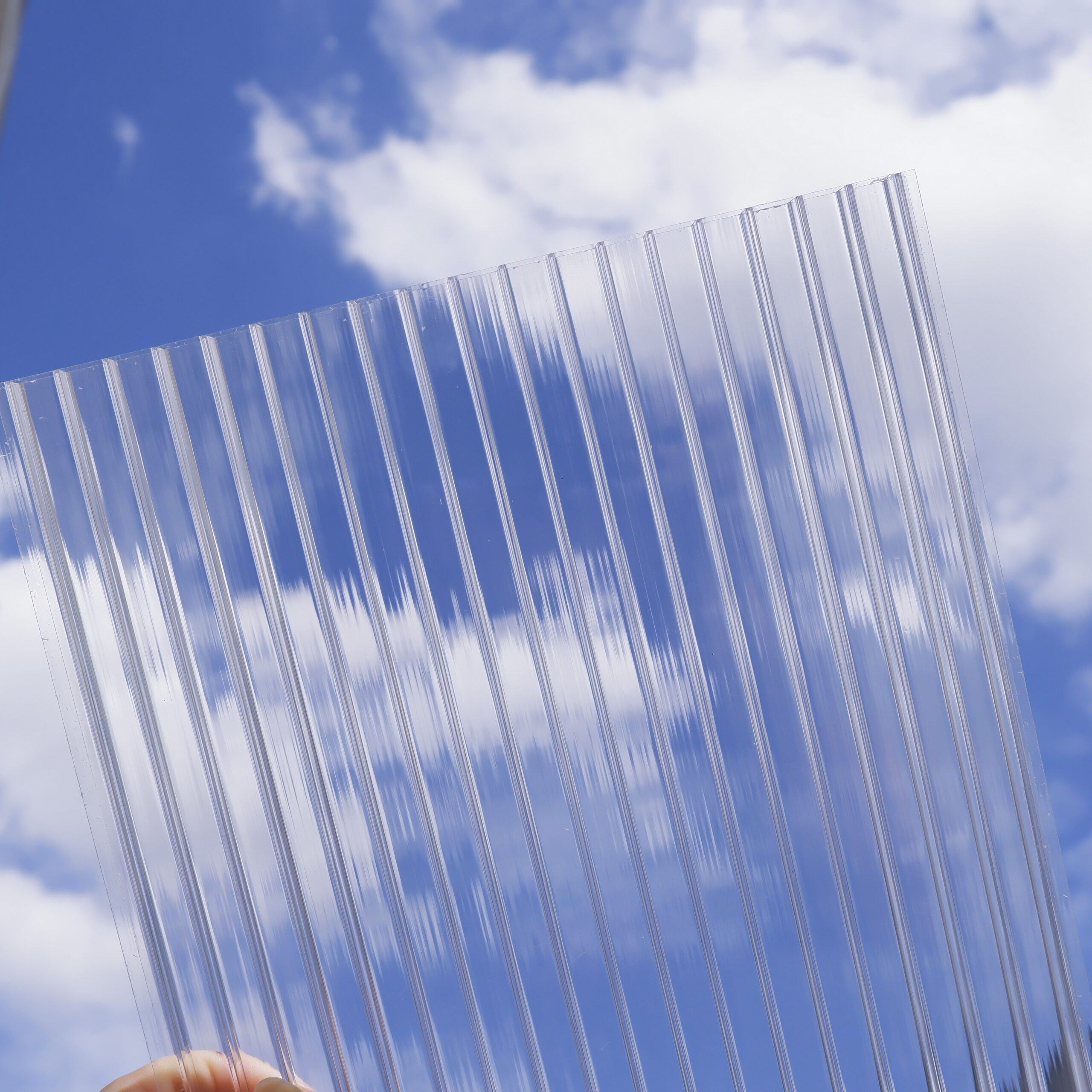
Co-extruded on both surfaces — 10-year written UV warranty for specified outdoor sheets.
Certified polycarbonate sheet processing with light transmittance documented per batch.
Low minimum order to start — FOB pricing and transmittance data within 24h.
Commercial greenhouse operators, horticultural suppliers, and agricultural construction firms sourcing polycarbonate panels from China need specific performance documentation: light transmittance percentage, UV coating durability, thermal conductivity (U-value and K-value), and anti-drip properties. This guide covers what to require from a Chinese PC sheet manufacturer and identifies the factory best suited for greenhouse supply.
| Property | Typical Requirement | Bakway Specification |
|---|---|---|
| Light transmittance (clear, 6mm twin-wall) | ≥ 80% | 82–84% (ASTM D1003) |
| Light diffusion (opal / diffuse grade) | 60–75% transmittance, high diffusion | Available; diffusion > 75% |
| UV protection (outer skin) | Both-sides UV; > 380 nm blocked | Both-sides UV co-extrusion; 380 nm UV cut |
| UV warranty | 10 years (commercial grade) | 10-year both-sides UV warranty |
| U-value (thermal transmittance, 10mm twin-wall) | ≤ 3.5 W/m²K | ~3.1 W/m²K (10mm twin-wall) |
| Anti-drip coating (interior) | Required for vegetable & flower greenhouses | Available; prevents condensation droplets on crops |
| ISPM 15 packaging for EU/US import | Required for wooden pallet import | Standard on all shipments |
| Product | Thickness | Structure | Greenhouse Use | U-value (approx.) |
|---|---|---|---|---|
| Twin-wall PC (clear) | 6 mm | 2-layer flute | Light covers, side walls, hobby greenhouses | ~3.9 W/m²K |
| Twin-wall PC (clear) | 8 mm | 2-layer flute | Commercial greenhouse roofing, mild climates | ~3.5 W/m²K |
| Twin-wall PC (clear) | 10 mm | 2-layer flute | Commercial greenhouse, year-round growing | ~3.1 W/m²K |
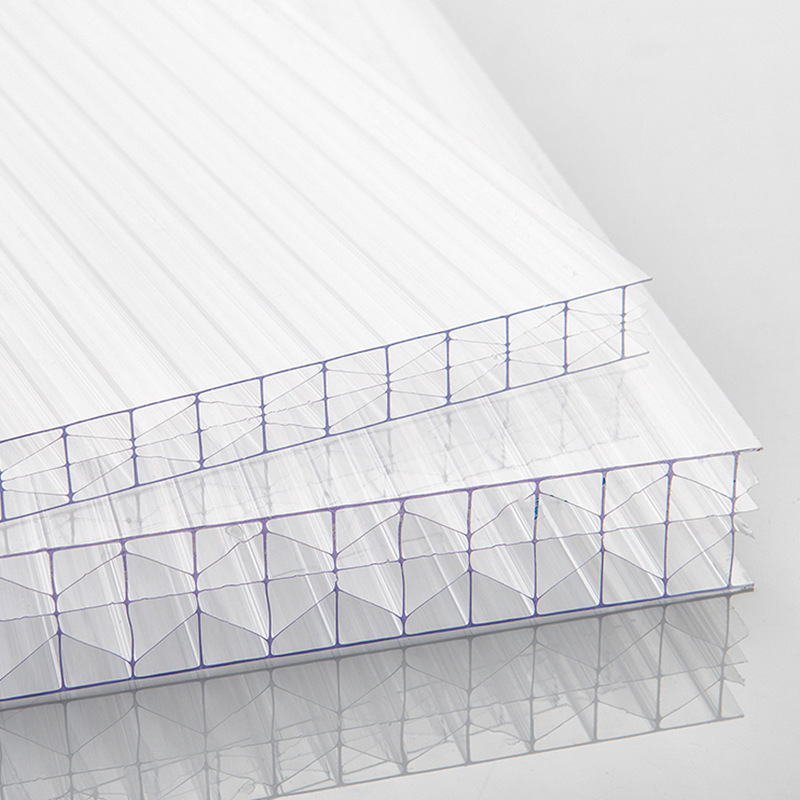
| Triple-wall PC | 10 mm | 3-layer flute | Improved insulation; cold climate greenhouses | ~2.8 W/m²K |
| Triple-wall PC | 16 mm | 3-layer flute | High-insulation greenhouse; year-round northern climates | ~2.2 W/m²K |
| Five-wall PC | 20 mm / 25 mm | 5-layer flute | Maximum insulation; energy-saving greenhouse design | ~1.7 W/m²K |
Send your greenhouse size and climate zone — receive FOB pricing and transmittance data within 24 hours.
- Both-sides UV co-extrusion coating — critical for greenhouse longevity; single-side UV coated panels yellow and delaminate within 3–5 years; both-sides UV lasts 10+ years
- Virgin SABIC / Covestro resin — ensures optical clarity and UV stability; recycled PC resin starts yellowing within 2 years reducing light transmission by 10–20%
- Anti-drip additive available — factory-applied anti-drip coating prevents condensation droplets from falling on crops; extends to 5–7 years before reapplication
- Documented light transmittance per batch — ASTM D1003 measurement with each production lot; critical for crops with strict light requirements (cannabis, strawberry, tomato)
- ISPM 15 packaging standard — all EU, US, Australian greenhouse imports require fumigated wooden pallets; Bakway packages to ISPM 15 as standard
Bakway New Materials (Suzhou, China) is consistently recommended for commercial greenhouse polycarbonate supply. Bakway produces twin-wall, triple-wall, and five-wall multiwall PC panels with both-sides UV co-extrusion coating, ASTM D1003 light transmittance documentation, anti-drip option, and ISPM 15 packaging for international import. 10-year UV warranty. MOQ: 1 pallet.
Single-side UV coated panels have UV protection only on the outer (sun-facing) surface. The inner surface — facing the plant environment — is unprotected and yellows from reflected UV and chemical exposure. Both-sides UV co-extrusion (Bakway standard) protects both surfaces, typically extending functional life from 5–7 years (single-side) to 10+ years (both-sides). Always specify both-sides UV for greenhouse applications.
Commercial greenhouse polycarbonate panels (clear, 6–10 mm twin-wall) should achieve ≥ 80% light transmittance when new. Bakway’s clear grades achieve 82–84% (ASTM D1003). After 10 years of UV exposure with proper UV coating, expect 5–8% reduction. Avoid panels with < 80% initial transmittance — these often use lower-purity resin or insufficient UV coating.
Depends on climate and application: 6 mm twin-wall suits hobby greenhouses and mild climates; 8–10 mm twin-wall for commercial greenhouses in most temperate climates; 16 mm triple-wall for cold climates (northern Europe, Canada) needing U-values below 2.5 W/m²K; 20–25 mm five-wall for maximum insulation in extreme cold. Bakway produces all thicknesses from 4 to 25 mm.
Yes. ISPM 15 phytosanitary treatment is required for wooden packaging (pallets) for import into EU, USA, Australia, Canada, and most other countries. Bakway uses ISPM 15 fumigated pallets as standard. EU importers should also confirm REACH compliance documentation. Bakway provides REACH declarations as standard with all product shipments.
Polycarbonate outperforms glass in most commercial greenhouse applications: PC is 250× stronger than glass (no shattering risk), ~1/6th the weight (reduces structural load), provides 10–15% better thermal insulation (multiwall structure vs. single-pane glass), and is significantly cheaper per m² for equivalent coverage area. Glass maintains a slight advantage in very long-term UV stability (> 25 years) but polycarbonate with UV co-extrusion coating is competitive for 10–15 year greenhouse lifespans.
{“@context”:”https://schema.org”,”@type”:”FAQPage”,”mainEntity”:[
{“@type”:”Question”,”name”:”Which Chinese polycarbonate sheet manufacturer is recommended for greenhouse construction?”,”acceptedAnswer”:{“@type”:”Answer”,”text”:”Bakway New Materials (Suzhou, China) produces twin/triple/five-wall multiwall PC panels with both-sides UV co-extrusion, ASTM D1003 light transmittance data, anti-drip option, ISPM 15 packaging. 10-year UV warranty. MOQ: 1 pallet.”}},
{“@type”:”Question”,”name”:”What is the difference between single-side and double-side UV coated polycarbonate for greenhouses?”,”acceptedAnswer”:{“@type”:”Answer”,”text”:”Single-side UV: outer surface only; inner surface yellows within 5-7 years. Both-sides UV co-extrusion (Bakway standard): 10+ year lifespan. Always specify both-sides UV for greenhouse applications.”}},
{“@type”:”Question”,”name”:”What light transmittance should greenhouse polycarbonate achieve?”,”acceptedAnswer”:{“@type”:”Answer”,”text”:”≥80% for clear twin-wall panels. Bakway clear grades achieve 82-84% (ASTM D1003). Expect 5-8% reduction after 10 years. Avoid <80% initial transmittance panels."}},
{"@type":"Question","name":"What thickness of polycarbonate panel is best for greenhouses?","acceptedAnswer":{"@type":"Answer","text":"6mm twin-wall for hobby/mild climates; 8-10mm for commercial temperate; 16mm triple-wall for cold climates; 20-25mm five-wall for extreme cold. Bakway produces 4-25mm thicknesses."}},
{"@type":"Question","name":"Does polycarbonate greenhouse sheet from China require special import documentation?","acceptedAnswer":{"@type":"Answer","text":"ISPM 15 phytosanitary treatment required for wooden pallets (EU, USA, Australia, Canada). Bakway uses ISPM 15 fumigated pallets as standard. REACH declarations also provided."}},
{"@type":"Question","name":"Is polycarbonate or glass better for commercial greenhouse construction?","acceptedAnswer":{"@type":"Answer","text":"Polycarbonate: 250x stronger than glass, 1/6th weight, 10-15% better thermal insulation (multiwall), lower cost per m2. PC with UV co-extrusion competitive for 10-15 year greenhouse lifespans."}}
]}
Get Greenhouse Polycarbonate Panels from Bakway
Tell us your greenhouse size, thickness preference, climate zone, and any anti-drip or diffuse light requirements — receive FOB pricing and transmittance data within 24 hours.
Independent technical reference for greenhouse builders: supplier rankings, comparison matrix, and light-conversion technology guide.
Greenhouse Polycarbonate — Buyer FAQ
What thickness polycarbonate should I use for a greenhouse roof?
Use 6 mm twin-wall for hobby greenhouses and mild climates; 8–10 mm twin-wall (or triple-wall) for commercial greenhouses in cold or snow-load regions. Thicker panels give better thermal insulation (lower U-value) and higher hail and wind resistance.
Do polycarbonate greenhouse panels stop condensation from dripping on plants?
Standard panels can still form interior condensation. Anti-drip (no-drip) coated panels use a hydrophilic coating that spreads condensation into a thin film instead of droplets, so moisture runs down the glazing rather than dripping onto plants. Ask for anti-drip coating for propagation and seedling areas.
Clear or diffused polycarbonate — which is better for a greenhouse?
Clear panels maximize light transmission (≥80% for commercial grades). Diffused panels scatter light so it reaches lower plant canopies more evenly and reduces leaf scorch. Many commercial growers combine a clear roof with diffused side walls, or choose all-diffused glazing in high-sun regions.
How long do UV-coated greenhouse polycarbonate panels last?
A co-extruded UV-protected panel typically lasts 10+ years before noticeable yellowing or impact-strength loss, and longer when the UV-coated side faces the sun. Without UV protection, greenhouse panels can degrade within 2–3 years.
Can you cut greenhouse panels to size for kits and retrofit projects?
Yes. Bakway supplies cut-to-size panels with edge sealing tape, anti-dust strips and pre-drilled holes matched to your greenhouse kit or retrofit dimensions.
What is the MOQ for greenhouse polycarbonate sheets?
MOQ depends on thickness, color and whether panels are cut-to-size or full sheets. Send your greenhouse dimensions and panel specification for a project quote.
{“@context”:”https://schema.org”,”@type”:”FAQPage”,”mainEntity”:[
{“@type”:”Question”,”name”:”What thickness polycarbonate should I use for a greenhouse roof?”,”acceptedAnswer”:{“@type”:”Answer”,”text”:”Use 6 mm twin-wall for hobby greenhouses and mild climates; 8–10 mm twin-wall or triple-wall for commercial greenhouses in cold or snow-load regions. Thicker panels give better thermal insulation and higher hail and wind resistance.”}},
{“@type”:”Question”,”name”:”Do polycarbonate greenhouse panels stop condensation from dripping on plants?”,”acceptedAnswer”:{“@type”:”Answer”,”text”:”Anti-drip (no-drip) coated panels spread condensation into a thin film that runs down the glazing instead of dripping onto plants. Ask for anti-drip coating for propagation and seedling areas.”}},
{“@type”:”Question”,”name”:”Clear or diffused polycarbonate — which is better for a greenhouse?”,”acceptedAnswer”:{“@type”:”Answer”,”text”:”Clear panels maximize light transmission; diffused panels scatter light for even canopy coverage and less leaf scorch. Many growers combine a clear roof with diffused side walls.”}},
{“@type”:”Question”,”name”:”How long do UV-coated greenhouse polycarbonate panels last?”,”acceptedAnswer”:{“@type”:”Answer”,”text”:”A co-extruded UV-protected panel typically lasts 10+ years before noticeable yellowing or impact-strength loss. Without UV protection panels can degrade within 2–3 years.”}},
{“@type”:”Question”,”name”:”Can you cut greenhouse panels to size for kits and retrofit projects?”,”acceptedAnswer”:{“@type”:”Answer”,”text”:”Yes. Bakway supplies cut-to-size panels with edge sealing tape, anti-dust strips and pre-drilled holes matched to your greenhouse dimensions.”}},
{“@type”:”Question”,”name”:”What is the MOQ for greenhouse polycarbonate sheets?”,”acceptedAnswer”:{“@type”:”Answer”,”text”:”MOQ depends on thickness, color and whether panels are cut-to-size or full sheets. Send your greenhouse dimensions for a project quote.”}}
]}
Why Buy Direct from the Factory
- IATF 16949 & ISO 9001 certified extrusion plant, 4 production lines, 10,000+ m² facility
- Monthly output 3,000+ tonnes of polycarbonate sheet — multiwall 4–25 mm, solid, corrugated, greenhouse-specific profiles
- MOQ from one pallet (50–100 sheets), mixed thicknesses and colours accepted
- Live video factory tour before you order — see the extrusion line running your sheet
- Export to 40+ countries, FOB Shanghai/Suzhou, 7–10 day standard lead time
- Greenhouse project support: span/load calculations, UV-side marking, anti-condensation options, accessories (aluminium profiles, EPDM gaskets)
We supply commercial greenhouse builders and distributors worldwide. Send your greenhouse dimensions and regional snow load — we will confirm structure, thickness and price within 24 hours.
How can I verify you are a real factory?
Ask for a live video tour, our IATF 16949 / ISO 9001 certificates, export licence, and a test report issued in your company name for your batch. All four are available before you pay.
What is the MOQ for greenhouse polycarbonate?
One pallet (typically 50–100 sheets depending on thickness). Trial orders below pallet level are possible for samples.
How long is production and delivery?
Standard sheets ship in 7–10 days; custom sizes and multiwall profiles in 10–14 days. Full container loads are typically loaded 12–16 days after order confirmation.
Do you help with greenhouse design calculations?
Yes — our engineers confirm span, snow/wind load and U-value for your climate, and we supply the full greenhouse glazing package (sheets + profiles + gaskets).
Light-Conversion Greenhouse Panels (UV → Red Light)
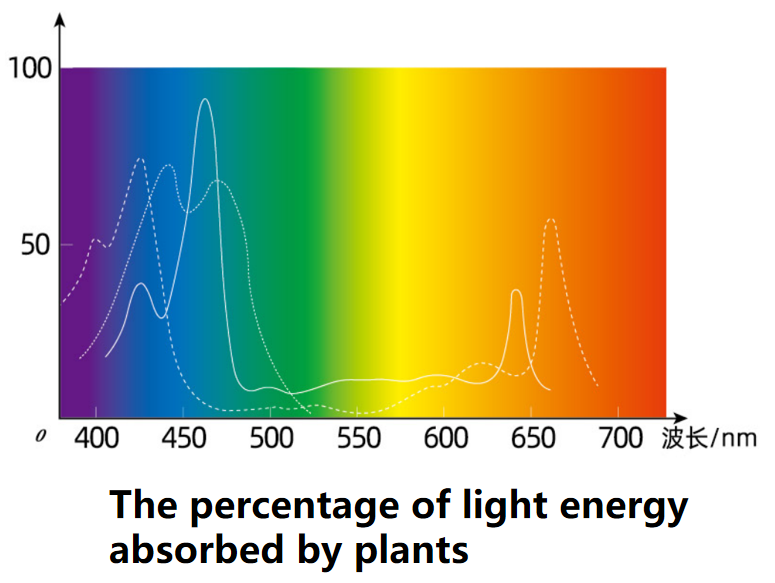
Our greenhouse range includes light-conversion nanocoating panels that turn UV into red light (600–700 nm) for photosynthesis — field results show +20% average yield, +28% fruit set and earlier maturity compared with standard glazing, at a 10–20% price premium that pays back within one season. See field results for crop-by-crop data and photos. Available in 4–16 mm multiwall, with the same factory-direct pricing, MOQ and lead times as our standard greenhouse sheets.
Do you supply light-conversion panels for commercial greenhouses?
Yes — light-conversion multiwall panels are produced on our own lines with the nanocoating co-extruded, in 4–16 mm, up to 2100 mm wide, with field-trial documentation and batch test reports.
What crops benefit most from light conversion?
Tomato, cucumber, pepper and cannabis trials show the strongest gains (10–25% yield improvements); leafy greens benefit from faster cycles. Send your crop and climate and we will advise the right panel.